I found this very interesting saying in this video. Watch this whole video it will show you a fantastic path.

Photo by Johannes Plenio on Unsplash

LonelyPoet's Poetry Box
I found this very interesting saying in this video. Watch this whole video it will show you a fantastic path.
Photo by Johannes Plenio on Unsplash
These scenes were taken from I believe a Turkish series about Maryam (AS) the mother of Isa (AS) who is known to the world as Jesus. This is what is told in the Quran about the divine conception. Watch the whole of it before asking questions.

Salat al-Badriyya is a poem composed by Indonesian scholar and poet Shaykh Ali Mansur Siddiq Bashaiban X (d. 1391/1971) in praise of the Prophet ﷺ and the companions martyred in the Battle of Badr. It is commonly known as Sholawat Badar in Indonesia where it holds a very special status. It is usually referred to as “Salatullah Salamullah” in other parts of the world.
I have looked for a perfect translation of this part of the great poem. I ended up taking some from the translation and merging it with another translation. This is made into a song so I am only giving the first two lines which Sharifah Khasif is performing amazingly in Bosnia Herzegovina in the video.
May the blessings of Allah, may the peace of Allah be upon Ta-Ha, the Messenger of Allah ﷺ
May the blessings of Allah, may the peace of Allah be upon Yasin, the beloved of Allah ﷺ
We seek intercession through the name of Allah, and by the Perfected Guide, the Messenger of Allah ﷺ
And all who strive in the way of Allah, Through your love of the people of Badr, O Allah!
Oh my Lord! Keep your people free from hardship and adversity From fear and sorrow and anxiety through your love of the people of Badr ya Allah
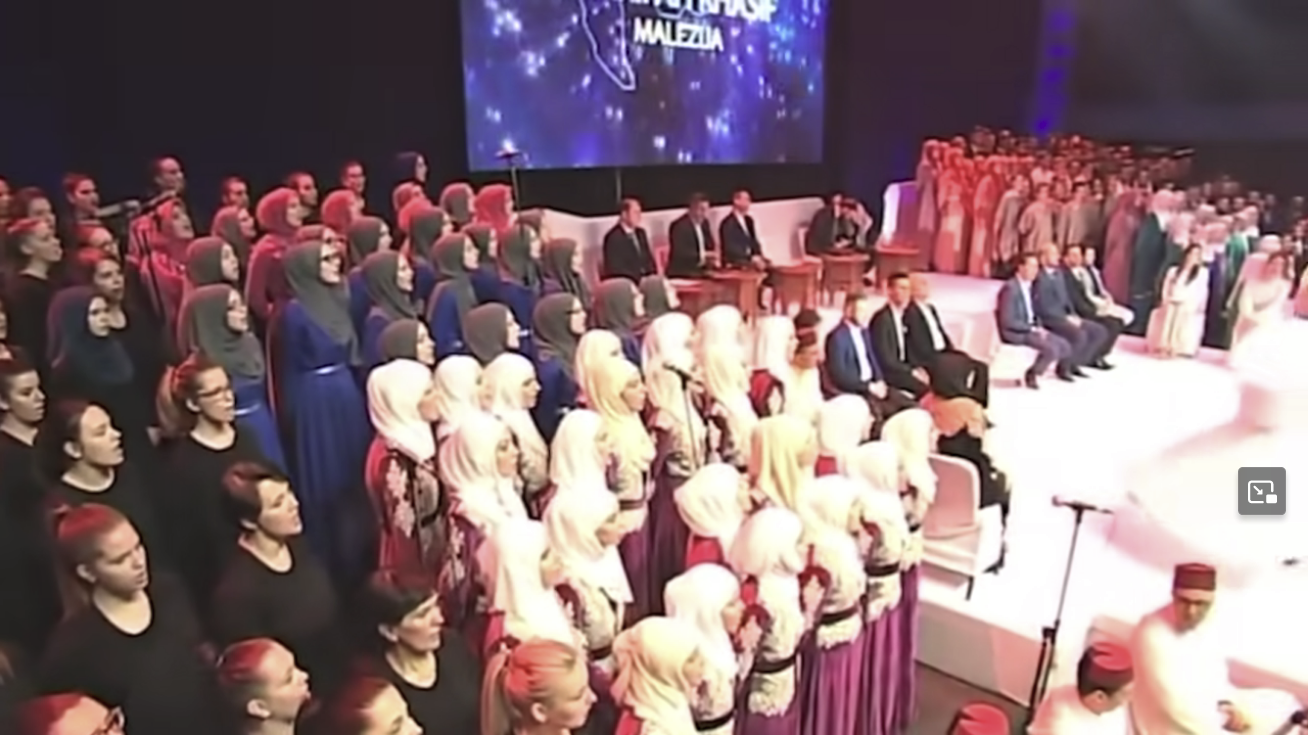

Here is another performance version of the same poem
Here is the audio only and all male performance of Salatullah Salamullah
The following is a translation of the full Arabic Text … I don’t know Arabic so I used ChatGPT to translate it.
“We sought through the name of Allah and through the guide, the Messenger of Allah. And every striving soul for the sake of Allah, with the people of Badr, O Allah.
O my God, safeguard the Ummah from afflictions and calamities, And from worries and grief, with the people of Badr, O Allah.
O my God, rescue us and remove all distress, Deceive the schemes of the enemy, and be kind to the people of Badr, O Allah.
O my God, relieve the sorrows of the sinners and the afflicted, And every trial, epidemic, with the people of Badr, O Allah.
How many mercies have been received, and how many humiliations have been repelled, And how many blessings have been attained, with the people of Badr, O Allah.
And how many people have You enriched, and how many people have You favored, And how many burdens have You relieved, with the people of Badr, O Allah.
Indeed, the heart has become constricted by the vastness of the earth, So relieve us from the difficult calamity, with the people of Badr, O Allah.
We have come seeking kindness, and the greatness of goodness and happiness, So extend the blessings upon us, with the people of Badr, O Allah.
Do not hesitate with disappointment, but rather make us virtuous, O Possessor of honor and majesty, with the people of Badr, O Allah.
And if you hesitate, then who shall we turn to, O Gatherer of supplications, with the people of Badr, O Allah.
O my God, forgive us and honor us, Grant us our requests, and ward off harm from us, with the people of Badr, O Allah.
O my God, You are the One with kindness, favor, and compassion, And how many distresses You banish, with the people of Badr, O Allah.
And send blessings upon the righteous Prophet, without counting or limit, And upon the noble family, descendants of noble lineage, with the people of Badr, O Allah.”
Please note that this translation is a general understanding of the text and may not capture the full depth of its meaning.
I took some lines from an old blog and started this poem. It is about finding ways out of the failures of life.

Photo by Josh Hild on Unsplash
On Another Note:
I haven’t written a personal blog here for a while now. Well, not a lot going on around. Ramadan was special, felt really sad when the month was over. Now all that I felt deep in my soul is giving me peace and tranquility. There is a world out there that is intoxicated in outrageous rampage. The LonelyPoet is finding it hard to maintain his loneliness and independence. I will write more when space unfolds in time.
When I first posted this poem on LonelyPoet.Com on January 27th 2009 there was a blog post along with this poem. When you go to the poem you will see that blog post. The following is ChatGPT’s analysis and blog post about this poem.
The poem “A Chat With Life” is a reflection on the experiences of the speaker and their relationship with life itself. The poem begins with a vivid description of a storm, setting a tone of chaos and uncertainty. The speaker reflects on the past, acknowledging that they have nothing to offer but tears to those who love them for who they are.
As the speaker looks back at their life, they see it as a monster merged with fate and crooked faces. However, they refuse to succumb to the wrath of fate and instead choose to wrap their life as a cloak to protect themselves and their loved ones. They urge life to bring them light and to fade away the forces that bring harm to others.
The speaker then turns their attention to a wonderful soul and the feeling of love that comes from the depths of their own soul. They declare their love for this person and state that they do not need life to give them sight because their love for this person is enough to light up their world. They ask life to cling to them, promising to be the best worker, faithful, loyal, and lover.
The poem is filled with vivid imagery and emotion, highlighting the struggles and challenges that the speaker has faced. The storm and flash flood are used as a metaphor for the difficulties that life brings. However, the speaker’s determination to protect their loved ones and their belief in the power of love provide a ray of hope amidst the chaos.
The poem’s message is one of resilience and the power of love to conquer all obstacles. Despite the struggles, the speaker chooses to focus on the light that love brings and vows to be the best lover they can be. The poem reminds us that even in the darkest of times, there is always hope and the promise of a brighter tomorrow.

Photo by Alexander Krivitskiy on Unsplash
The poem “To Regain A Calm State Of Mind” speaks to the universal human experience of searching for inner peace and the struggle to find it in the midst of life’s challenges. The author acknowledges the pitfalls of seeking validation from others and the danger of losing oneself in the process.
The poem highlights the importance of living a simple life, unburdened by the need for constant validation and the value of finding like-minded souls. The pursuit of happiness lies in the peace we can cultivate within ourselves, through shared dreams, caring actions, and supportive relationships.
The author acknowledges the mistakes they have made in the past and the negative consequences of depression, addiction, and insecurity. But they also recognize the positive side that is often missed, the opportunity to learn, grow, and find inner bliss. They share their personal experience of writing and sharing their thoughts as a saving grace, a place to escape and find their own pace.
The poem emphasizes the power of forgiveness, both for oneself and others, as the first step towards regaining a calm state of mind. The author speaks to the transformative nature of forgiveness, which leads to meaningful thoughts, renewed purpose, and a new reason to breathe.
The poem challenges our limited understanding of the world and the importance of looking beyond our five senses. The author speaks to the transformative power of inner purity, which brings peace and innocence to our lives.
In conclusion, “To Regain A Calm State Of Mind” is a powerful reminder of the importance of self-awareness, forgiveness, and cultivating inner peace. The author speaks to the universal human experience of struggling to find meaning and purpose in life and the transformative power of forgiveness and inner purity. The poem encourages us to find our own path to peace and to never give up on the journey towards a calm state of mind.

Photo by Amy Treasure on Unsplash
The poem “Tragedy Of An Apology” explores the complexities of apologies and the misunderstandings that often come with them. The poem suggests that an apology is a step-by-step process that requires sincerity and effort to make amends, but it is often misinterpreted as a trap to catch our friends. The author notes that flesh and blood humans stumble and falter along the way, but they try their best to make things right.
However, the wild and wicked world is quick to judge and label the ones apologizing as the ones in the wrong, not right. The author laments that this misunderstanding can be a fatal blow to a romance, as one may fail to see and feel the effort put forth in the apology. Instead, they conspire and choose to enhance the idea that the one apologizing is of no worth.
The poem then emphasizes that a heartfelt apology is not just a sentence, but a promise to change and a willingness to work on the problem, day and night. It calls on us not to be quick to judge or dismiss those who try to make things right, as an apology is a long and strong bridge that leads to a love-filled future full of light.
The final stanza of the poem takes a personal turn as the author reflects on their own experience with apologies. The speaker laments how their own imperfect words or thoughts or heart’s desires may have caused pain to someone else, or how their regrets may have led them down a path of folly. The speaker seems to suggest that apologies are not just for others, but also for ourselves, as they can help us acknowledge our mistakes and make amends for them.
In conclusion, “Tragedy Of An Apology” is a thought-provoking poem that explores the complexities of apologies and the misunderstandings that often accompany them. The author emphasizes the importance of sincerity, effort, and a willingness to change when making amends, and calls on us to be more understanding and forgiving of those who apologize. The poem also reminds us that apologies are not just for others, but also for ourselves, as they can help us learn from our mistakes and grow as individuals.

Photo by Teslariu Mihai on Unsplash
The Frozen Spring is a beautiful and poignant poem that captures the disappointment and heartbreak that can come from unfulfilled expectations. The poem is rich with metaphorical language and uses the changing seasons to symbolize the ebb and flow of love and relationships.
The poem begins with the speaker eagerly anticipating the arrival of spring, a time associated with new beginnings, growth, and warmth. However, the speaker’s hopes are dashed when winter unexpectedly returns, covering the budding flowers and leaves with snow and leaving the speaker feeling cold and alone.
The metaphor of the snow is used throughout the poem to represent unfulfilled promises and expectations. The snow is initially beautiful, like promises that seem too good to be true, but it quickly melts away, leaving behind only disappointment and regret. The speaker compares the snow to their lover’s promises of love, which initially seemed bright and full of life, but ultimately fell short, leaving the speaker feeling deserted and alone.
The poem’s imagery is powerful, creating a vivid and evocative portrait of the speaker’s emotions. The use of personification, such as the “stunned sprouts” and the “songs” of the birds, helps to bring the natural world to life and make the speaker’s experience more relatable.
Overall, The Frozen Spring is a beautiful and moving poem that captures the pain of unfulfilled expectations and the disappointment of love gone cold. The poem’s use of metaphor and imagery makes it a timeless piece that will continue to resonate with readers for years to come.

Photo by Brigitte Tohm on Unsplash
In October 2013 I wrote a blog post titled “In Eternal Sadness Of Losing You”. I started that blog post with two lines and those lines were the backbone of The poem “Decorated Doors” which is a thought-provoking piece that explores the themes of imagination, love, and hope. The poem speaks to the human experience of seeking connection, particularly in the form of love, and the disappointment and perseverance that often accompanies it.
The poem opens with a description of beautifully decorated doors that serve as a symbol for the potential of what lies within. Each decoration is an invitation to enter a space where the imagination can run wild and new wonders can be defined. The doors are also a physical representation of the barriers that keep what is inside safe, a reminder that not everything should be freely accessed.
I then reflects on my own personal experience with these decorated doors, particularly the disappointment of knocking on many doors that remained unopened. The initial excitement of the decoration eventually gave way to a sense of disillusionment as I came to understand that the meanings behind the decorations were often empty promises.
Despite this disappointment about a love failure, I still find myself drawn to these decorated doors, a habit filled with hope. The poem ends on a somewhat melancholy note, with me still knocking on doors in search of the connection I desire.
The poem’s exploration of the human desire for connection and the disappointment that often accompanies it is a universal theme that many readers will relate to. The use of the decorated doors as a symbol is particularly effective, creating a visual representation of the potential for connection that is both enticing and elusive.
Overall, “Decorated Doors” is a poignant and reflective poem that speaks to the human experience of seeking connection, the disappointment that often accompanies it, and the enduring hope that keeps us knocking on doors in search of love.

Photo by Annie Spratt on Unsplash
A long time back in a blog post I wrote the following
“True love is like your mother, she can only conceive you once, she can only carry you once, she can only deliver you once. Then forever she is your mother. There can be million people who can look, speak and act like your mother. None of them will be like the mother who conceived you carried you, and delivered you.”
Well, that’s where it all started. I recently looked back into that post and pulled it out. I tried to generate a blog post about this as well as a poem with ChatGPT. It gave me a framework for a poem and the blog post was all about motherhood. So I used the framework and went with my sleepy brain to write this. I will take a look back at this after Ramadan. But for now.. Enjoy… if you find serious flaws let me know.

Photo by Greg Rakozy on Unsplash